
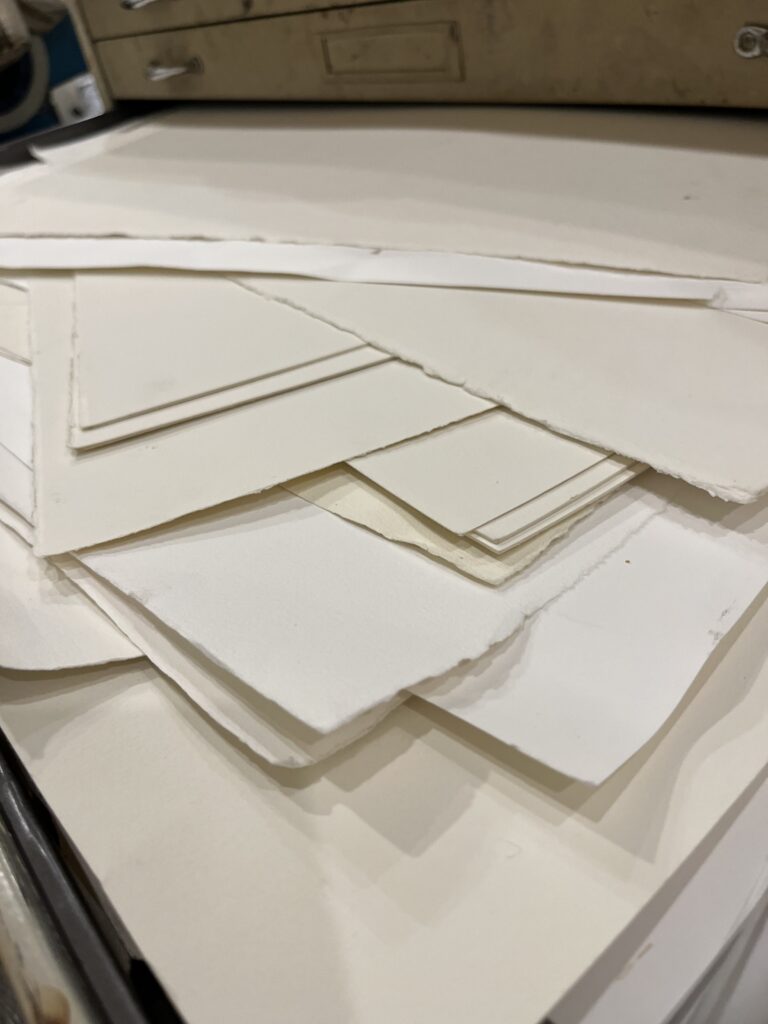
In my considerable number of years of being a graphic artist I can think of two words that describe a sheet of clean white paper-daunting and beautiful! That being said, I admit it’s because the array of vibrant tones and rich textures which can be overwhelming sometimes. Soft but hard at the same time , and the fine details that feel special to the touch. Each type has a unique purpose
The variety of paper is enormous: Printing, writing, wrapping, drawing, blotting, handmade, and specialty papers are some. Cotton, linen, pearlescent, and vellum, laid copy, bond, cardstock and even lowly but durable newsprint are all part the paper makers world. And the titles given to the artisans, such as the vat man , the couchier the layman are unique to each step of the process. But one thing is certain-they are all craftsmen.
Paper begins as a humble thin flat material made by pressing wet plant fibers, mostly wood pulp or cotton rags, together and drying them into flexible sheets. It is more than a matrix for the ink, oil paint or watercolor or everything else you will lay on it’s surface. It acts as more than the pages between the front and end jacket of you favorite book. Papermaking had an ancient and violent beginning which is deeply tied to military conflict, captive labor, and industrial espionage. While paper was traded as a luxury commodity along the Silk Road with other wares, the recipe itself was a highly guarded state secret that countries used force and theft to acquire.
For six centuries China maintained a true monopoly on papermaking. That was was shattered during a military clash between the Chinese Tang Dynasty and the Islamic Abbasid Caliphate at the Battle of Talas, modern-day Kyrgyzstan. Islamic forces defeated the Chinese army and captured tens of thousands of prisoners.
Among these prisoners were skilled Chinese artisans and papermakers. To secure their freedom or livelihood, these captives built the first paper mills in Samarkand. This single event broke China’s secret wide open, fueling the Islamic Golden Age and eventually allowing paper to reach Islamic Spain. Thus began a new age of discovery and artisan craftsmanship in the 11th and 13 century then in Europe. Throughout Europe you can see a new set of issues arising including the search for wood pulp, patents on paper recipes, along with advent of silk and introduction of of rags and faster beating machines. But eventually all smoothed out during the 18th and 19th an so on.
And now we are in the digital age, where the value of a piece of paper might be less respected, but I am reaping the benefits from all those before me – and I am astounded with the of history and the allure of the mills, the paper, all of it!
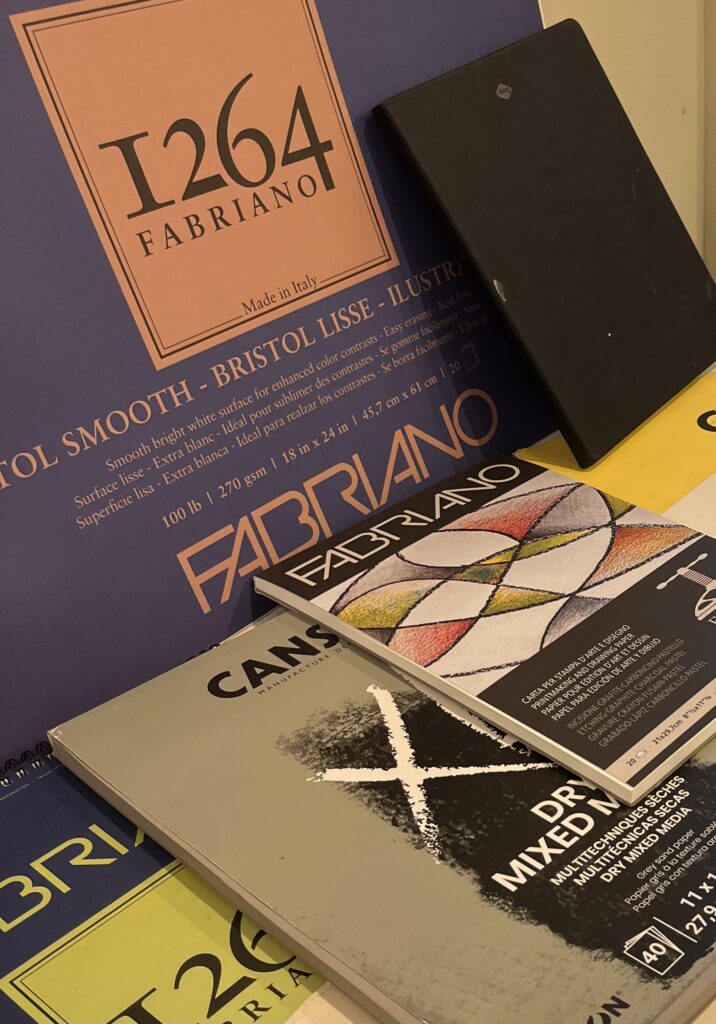
I use Fabriano, a gorgeous paper with many weights and finishes The historic brand continues to manufacture artistic, drawing, and specialty paper lines at its production plants across Italy, since 1264….check out the link. https://fabriano.com/en/history/
I also use St Cuthbert’s Mill , Somerset, England.: Known worldwide for Somerset printmaking, drawing and Canon digital paper.https://www.stcuthbertsmill.com
.